
Southwest · Congress Heights
Petworth Cabinet Quote Preparation
Bring your project details together before considering a cabinet purchase.
Send my cabinet inquiry
Or call (562) 203-3232. Calls only, we do not receive text messages.
A cabinet request described as Petworth needs an exact address and a room-specific product record. District Cabinet Edit provides independent guidance for keeping those details accurate while you compare goods. The neighborhood name can orient the conversation, but it should not determine the current ward label or stand in for measurements and seller terms.
- Independent buying guidance
- Product inquiries
- Seller availability confirmed separately

Cabinet purchase preparation in Petworth
The corridor source below spans stated wards, and the District does not maintain official neighborhood boundaries. Form submissions create a record for owner review, without automatic seller forwarding or a guaranteed response. Use the local context to verify labels, then prepare actual room and purchase questions for the responsible parties.
About District Cabinet Edit
Know who handles each part
Independent cabinet buying information and quote-request service. We do not manufacture, stock or install cabinets. A referral, supplier response, appointment or purchase is not guaranteed. Product availability, delivery and installation must be confirmed directly with the seller or separately engaged contractor.
Separate the corridor plan from the current address question
The DC Office of Planning says the Georgia Avenue-Petworth corridor plan runs between Decatur Street in Ward 4 and Euclid Street in Ward 1. It records Council approval in 2006. These are narrow observations about the named corridor and its plan history.
The Office of Planning also states that DC has no official neighborhood boundaries and points users to current address-specific ward lookup. The practical buying inference is to verify the exact project address and current ward when relevant, rather than infer them from Petworth alone.
Keep the corridor source identified as context. It does not establish a property classification, cabinet approval or seller territory. A plan spanning stated wards should not be translated into one current label for every address described by the neighborhood name. Use the actual lookup and appropriate property records for those questions while the cabinet documents describe the products and room. Each record has a useful but limited subject.
Distinguish the buyer address, room address and receiving destination
Label contact information according to its role. The purchaser's correspondence address may differ from where cabinets will be used or received. Include the actual room or unit identifier needed to distinguish the project.
Give the purchase a reference so drawings and proposals stay attached to the correct address. A locality name is helpful shorthand but not a replacement for that information. If jurisdictional labeling matters, record the result and source of the current check separately.
Consider a hypothetical buyer describing a project as Petworth while receiving correspondence elsewhere. The seller needs the proposed order destination, and the fit reviewer needs the actual room inputs. If goods would be received at a third location, label it and identify who handles later movement. Keeping these roles distinct prevents one address from silently becoming all three, without claiming that any arrangement is accepted until the seller and relevant parties confirm it.
Keep the verified address spelling on the schedule and proposal so a later revision does not reintroduce a different destination from an older contact record.
Let the actual room determine the product outline
Describe the intended change and retained features. List cabinet types, quantities, configurations, finish and known sizes, adding panels, fillers, trim and accessories as explicit pieces or questions. Mark provisional dimensions clearly.
IKEA's US planning guide supports collecting room measurements and retained appliance dimensions. Use a labeled sketch, actual model information and source dates. A neighborhood description cannot supply this room evidence.
For a hypothetical kitchen comparison, the buyer might preserve the arrangement while selecting different storage configurations. The new products still need review against actual openings and retained appliances. This information site does not undertake property measurement or provide a final fit approval. Agree who performs the final dimension and compatibility reviews within the actual seller and professional arrangements. The room can be described provisionally at the inquiry stage, but the unit schedule should not become an order basis while critical inputs remain assumptions.
Give alternatives names and preserve their product differences
Ask each prospective seller to identify line, codes, door style, finish and included accessories. Matching counts or a similar look cannot prove that two offers contain equivalent products. Keep the proposal connected to the current unit schedule.
If two options serve storage differently, record that tradeoff. One hypothetical alternative might emphasize drawers while another retains a door configuration. Compare how each meets the stated priority rather than judging only the total.
Ask for actual product evidence and any relevant sample confirmation. If certification matters, obtain documentation for the precise line; a broad standards reference cannot approve an unnamed offer. A Petworth label does not establish availability or appropriate construction. Keep missing evidence visible and direct the question to the actual seller or fit reviewer. The purpose of the local guide is a clearer record, not an imagined neighborhood-typical kitchen or a promised product connection.
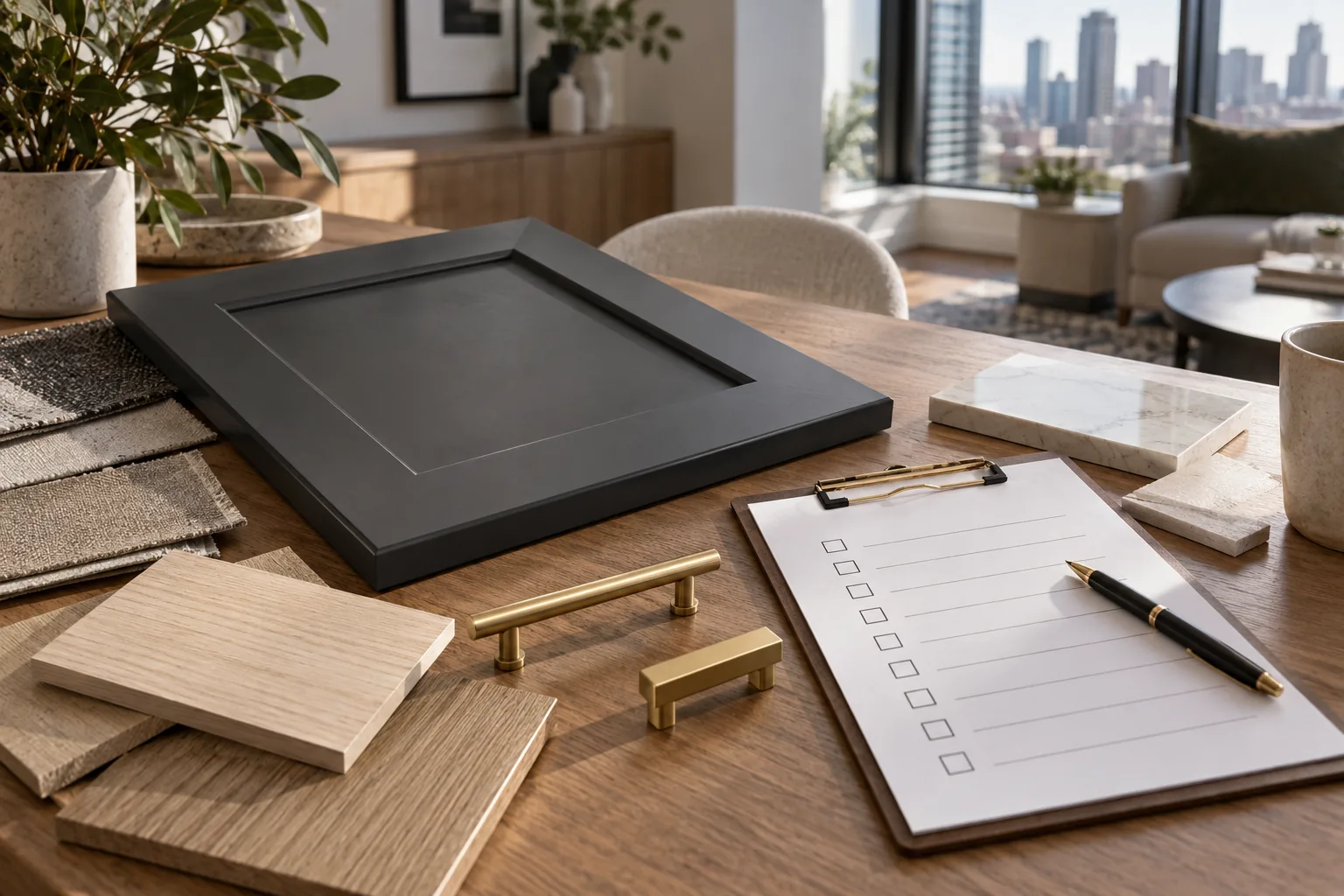
Compare price with the destination and complete scope identified
Trace amounts to quantities and cabinet box configurations, then finish, panels and accessories. Identify alternates as part of the total or separately offered. Reconcile missing goods before treating two amounts as prices for the same purchase.
Separate the applicable freight, pickup, carrying, assembly and storage terms from the cabinet goods. Each receiving amount should name the particular destination and handoff it is intended to cover. External labor for removal, installation or other work requires its provider's actual agreement.
The FTC recommends written work estimates stating materials, scope and price, useful for comparing external arrangements. Initial estimates may change; obtain the final offered price and inclusions in a written quote. For the hypothetical separate-address purchase, an old destination assumption may no longer price the desired handoff. Ask for revision rather than carrying the amount forward. Unanswered costs remain unknown until clarified, and neighborhood context cannot establish acceptance or commercial commitments.
Keep the final order tied to verified inputs and current labels
Date the drawing and unit list and give them matching revision references. Preserve the address record and source for any relevant current ward identification. Ask proposals and reviews to identify their version rather than assuming everyone uses the newest attachment.
Name purchaser, final fit approver and receiver. Obtain actual seller acceptance, handoff and discrepancy/change terms. If a product or address changes, identify affected approvals and request revised information.
For the first inquiry, state the project address, locality reference, room, intended goods and next unresolved question. The record can be useful before all choices are final. Before purchasing, reconcile the checked room, authorized schedule and actual written quote. The corridor context remains a source for its own stated geography and history; the accepted order describes this purchase. That distinction lets a Petworth inquiry stay precise without pretending a neighborhood name settles the decisions for a particular property.
Inquiry process
From buying questions to a possible supplier quote
Sending an inquiry does not reserve products or book work.
Describe the purchase
Include project ZIP, room, approximate cabinet list and preferred timing.
Clarify requirements
Identify assembly, access, measurements and any separately arranged labor.
Confirm referral availability
An inquiry can be referred only if a suitable seller accepts the location and product request.
Review seller terms
Confirm the final drawing, itemized price, payment, delivery and return terms directly before ordering.
Illustrative product choices
Illustrative product visualizations, not completed work, local properties or supplier facilities.
Local buying information
Other local buying guides
Questions
Petworth Questions
Does Petworth alone establish the current ward for my address?
No. The corridor source spans stated wards, and DC has no official neighborhood boundaries. Use the current address-specific lookup when ward identification matters. Keep the result separate from product fit and seller acceptance questions.
What does the 2006 corridor plan observation establish?
It records the named corridor's stated Decatur-to-Euclid geography and Council approval history. It does not classify an individual room or approve a cabinet purchase. Actual address and property questions need their appropriate records.
Can a different receiving address be included in the project record?
Yes, label it separately and name the receiver and any later movement responsibility. Ask the actual seller to assess its destination and handoff terms. A proposed arrangement should not be represented as accepted before confirmation.
Do unchanged kitchen walls mean new configurations are automatically approved?
No. Retained appliances, openings and selected units still need their assigned fit review. Provide checked room and actual product information and identify final approval roles. A familiar arrangement does not approve every substituted configuration.
Talk to us about your project in Petworth
Describe the purchase and project ZIP in Washington. Supplier acceptance and any referral are confirmed separately; no visit or quote is booked by this form.
Calls only, we do not receive text messages.